Waste separation in England: a helpful guide
Waste rules have changed – and with Digital Waste Tracking starting from 1 October 2026, there’s even more focus on where our waste goes.
If you’re not quite sure what your workplace should be separating (or whether you’re doing it right), don’t panic. We’ve made this blog as simple as possible to help you out.
Step 1: Check if the rules apply to you
If your business has 10 or more full-time equivalent employees, the Simpler Recycling rules already apply to you.
That means you need to separate recyclable waste, food waste and non-recyclable waste before it’s collected.
Got fewer than 10 full-time equivalent employees? You’re classed as a micro-firm and have until 31 March 2027 to comply – although there’s nothing stopping you getting ahead now.
Step 2: Rethink your bins
Still have a bin under every desk? It might be time for a rethink.
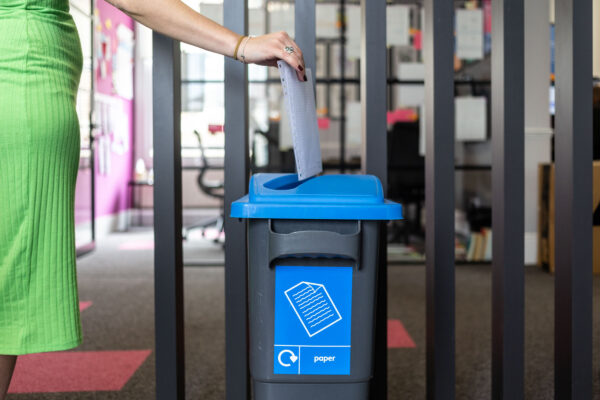
Central waste and recycling stations make it much easier for everyone to separate their rubbish correctly – and can help cut down on those rogue coffee cups ending up where they shouldn’t.
The number and type of bins you need will depend on your workplace and the arrangements you have with your waste collector.
Step 3: Know your waste
As a minimum, workplaces need to keep these waste streams separate before collection:
- Food waste – yes, even those occasional banana skins, tea bags or lunchtime leftovers
- Dry recycling – plastic, metal, glass, paper and card
- Non-recyclable waste – anything that can’t be recycled
Paper and card generally need to be collected separately from plastic, metal and glass, although your waste collector may be able to collect them together in certain circumstances.
Need a little more help? Take a look at our Waste Separation Legislation Solution Guide for an easy-to-follow breakdown of the rules, waste streams and recycling solutions for your workplace.

Step 4: Make it obvious
The easier your recycling system is to understand, the easier it is for everyone to get it right.
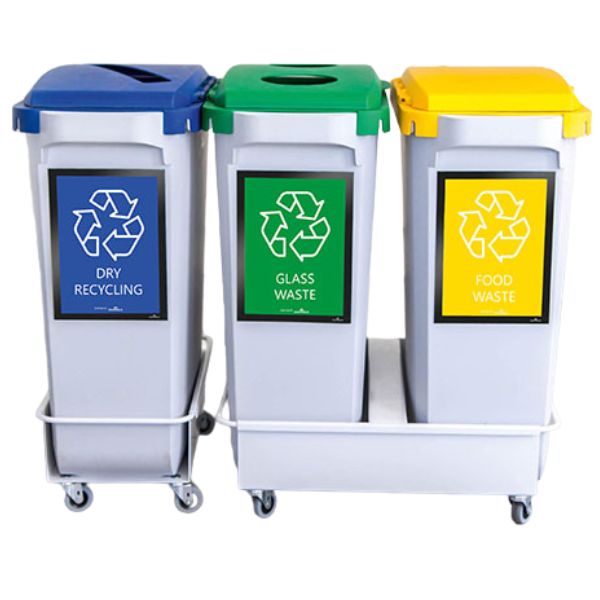
Colour-coded bins and lids, or clear labelling, are simple ways to make different waste streams instantly recognisable – particularly in busy kitchens, breakout areas and shared spaces.
Top tip: Keep your colours consistent across your workplace so nobody has to stop and think about which bin is which.
Step 5: Label, label, label
Even the best recycling station won’t work if nobody knows what goes where.
Add clear, easy-to-read labels showing exactly what belongs in each bin. You can download our recycling labels from the Durable Durabin page, then pop them into a Duraframe sign holder for an easy-to-update setup.
No guesswork. No excuses for putting your lunch leftovers in the recycling.
Step 6: Get your team on board
A shiny new recycling station is only half the job.
Let your team know what’s changing, where the bins are and – most importantly – what goes in them.
If you’re removing individual desk bins, explain why. A quick email, a few signs and clear labels around your waste stations can make the switch much easier.
Step 7: Do regular checks
It only takes a few things in the wrong bin to cause problems, so check your waste stations regularly.
Clear or translucent waste sacks can make it easier to spot contamination before your waste is collected and identify where your team might need a reminder.
Getting it right also means more material has the chance to actually be recycled rather than ending up in landfill.
What about Digital Waste Tracking?
There’s another waste change on the horizon.
From 1 October 2026, permitted or licensed organisations that receive controlled waste in England and Wales will need to digitally report details of the waste they receive.
For most ordinary workplaces, this doesn’t mean you’ll suddenly need to log every bag of rubbish yourself. The initial reporting requirement sits with permitted or licensed organisations receiving the waste.
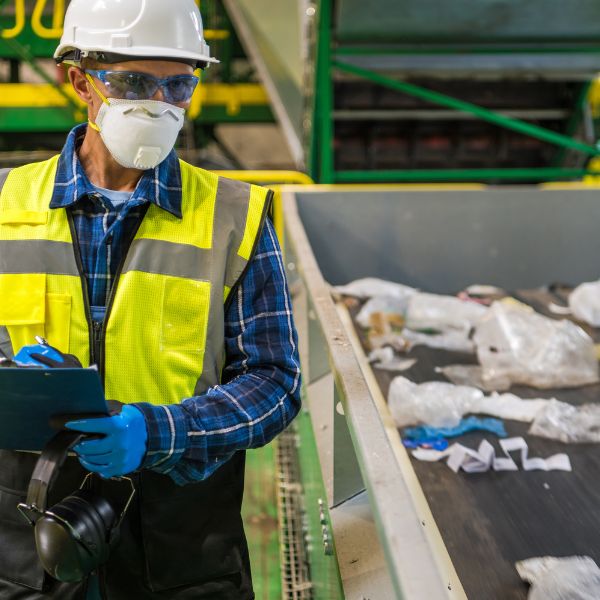
However, it will create a more consistent digital record of waste movements – another good reason to make sure your workplace has clear waste processes in place and that you’re following the Simpler Recycling requirements.
And there are more changes coming in 2027.
From 31 March 2027:
- Micro-firms with fewer than 10 full-time equivalent employees will also need to comply with Simpler Recycling.
- Plastic film and plastic bags will be added to the plastic recycling stream for workplace collections.
So, if you’re reviewing your recycling setup now, it’s worth thinking ahead. A flexible system that can adapt as your waste streams change could save another bin rethink further down the line.
Ready to sort your waste setup?
Whether you’re starting from scratch or your current recycling station could do with a tidy-up, we’ve got the bits to make waste separation simple.
From Durable Durabin recycling bins and colour-coded lids to labels, bin trolleys and waste sacks, you can create a setup that works for your workplace – and makes it much easier for everyone to put the right thing in the right bin.
Need a hand choosing the right setup? Get in touch with us and we’ll gladly help.



Recent Comments