
Movement at work: sit, stand, stretch, repeat.
For years, office workers have been asking the same question: Is it better to sit or stand at work?
Well guess what? You can stop feeling guilty about sitting down. And you definitely don’t need to spend eight hours standing like you’re waiting for a bus that never arrives.
The latest advice is surprisingly simple: movement. In other words, it’s not about sitting or standing – it’s about moving between the two regularly.
Why is movement so important?
Whether you’re powering through emails, deep in spreadsheets or stuck in back-to-back Teams calls, staying in one position for too long isn’t doing your body any favours.
Research has shown that long periods of uninterrupted sitting can contribute to aches and pains, while standing in one place for hours isn’t much better. Your body is designed to move, not stay frozen in one position all day.
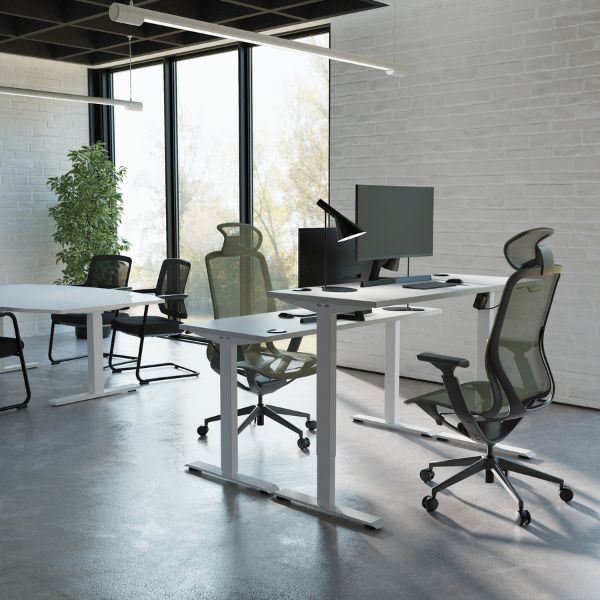
Changing your posture regularly can help:
- Reduce stiffness and muscle fatigue
- Ease pressure on your back, neck and shoulders
- Improve circulation
- Boost energy and concentration
- Encourage healthier movement throughout the day
So, how often should you stand?
A good rule of thumb is to alternate between sitting and standing throughout the day, gradually building up to around two hours of standing or light movement during your working day if you’re using a sit-stand desk. The key word here is gradually – don’t go from sitting all day to standing all day overnight.
Think of your sit-stand desk as a tool to help you move more, not a challenge to see how long you can stay on your feet.
Our top 5 sit-stand desks:
- Air Lite 1600mm Height Adjustable Office Desk, Silver Leg, Grey Oak
- Air 1600mm Rectangular Height Adjustable Desk, Black Leg, Black
- Air 1200mm Slim Rectangular Height-Adjustable Desk, White Leg, White
- Leitz Ergo Slim Sit/Stand Desk, 800mm, White
- Astin Economy Sit-Stand Desk, White Leg, 1200mm, Beech Top
How to get the most from your sit-stand desk
1. Start small
Try standing for 15 minutes every couple of hours. You can eventually increase the time spent standing if it feels comfortable to do so.
2. Set reminders
It’s surprisingly easy to lose track of time. A calendar reminder, smartwatch alert or desk timer can give you a gentle nudge to switch positions.
3. Get your setup right
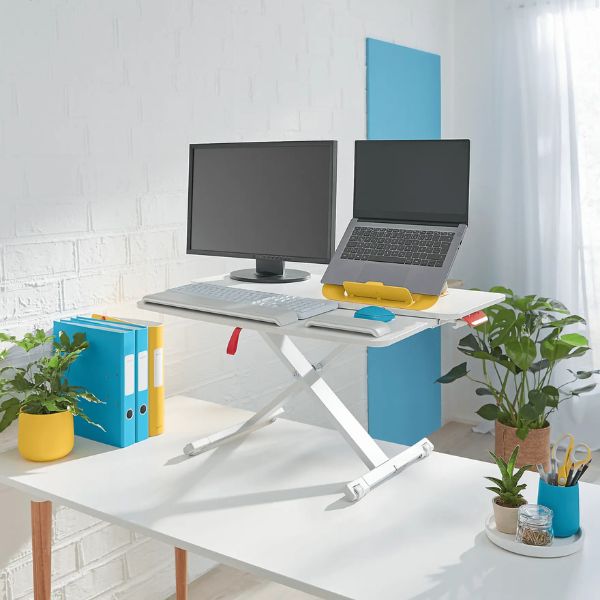
Whether you’re sitting or standing, try keeping the top of your screen at eye level, and your elbows at around 90 degrees. A mouse mat with a gel wrist rest is good for keeping wrists in a comfy, neutral position.
4. Keep moving
Standing still for hours isn’t the goal. Shift your weight, stretch, walk around and keep changing position.
Enter: movement snacks
No, we’re not talking about biscuits.
“Movement snacks” are exactly what they sound like – short bursts of movement throughout your day. Rather than saving all your exercise for the gym, you give your body little opportunities to move every 30-60 minutes. Experts increasingly recommend this approach because regular movement is more beneficial than staying in one “perfect” posture all day.
Some easy movement snacks include:
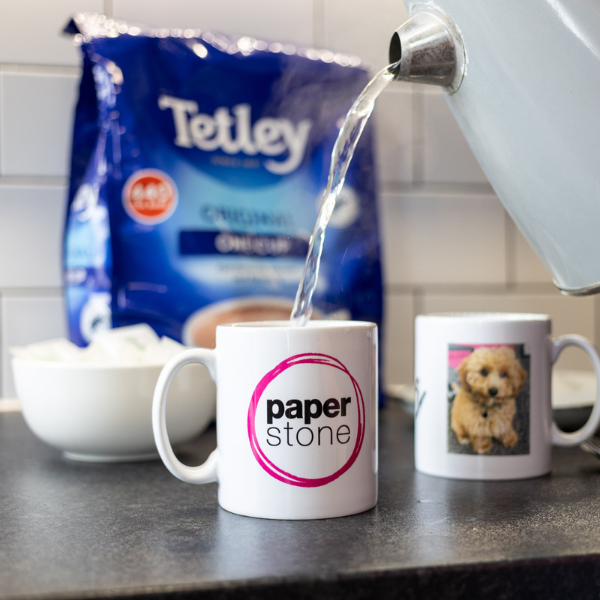
- Making a cup of tea (strictly essential research, of course)
- Walking while taking a phone call
- Stretching your shoulders or back
- Taking the scenic route to the printer
- Doing a lap of the office between meetings
- Standing up while reading emails
- A few squats or calf raises while the kettle boils
They’re quick, easy and surprisingly effective at breaking up long spells at your desk.
The bottom line
It’s not a case of sitting or standing being “better”.
It’s simply about movement.
Alternate between sitting and standing, take regular movement snacks and avoid staying in one position for too long. Your back, neck and brain will probably thank you for it.
After all, the healthiest workstation isn’t the one where you stand all day – it’s the one that helps you keep moving.
If you want to look at “movement solutions” for your workspace, get in touch with us and we’d be happy to help.



Recent Comments