
Period care at work: What’s the deal with sanitary waste?
Let’s face it – sanitary waste disposal isn’t exactly the hottest topic around the office. It’s one of those things that’s quietly expected to work in the background, until someone starts asking questions and everyone looks at each other awkwardly.

Can sanitary waste go in general waste? Do you need a specialist collection service? And what are employers actually required to provide?
There’s plenty of conflicting advice out there, so we wanted to clear a few things up.
First things first: employers do have a legal responsibility
If your workplace has female employees or visitors, UK workplace regulations require suitable sanitary disposal facilities in female (and unisex) toilets.
The Workplace (Health, Safety and Welfare) Regulations 1992 state that suitable receptacles for sanitary dressings should be provided where they’re needed. Basically, every workplace should offer people a safe, hygienic and discreet way to dispose of period products.
Seems straightforward so far…
Once the bin is full – then what?
Is sanitary waste clinical waste?
This is probably the biggest misconception.
The answer is no.
Under UK waste guidance, sanitary waste is generally classed as offensive waste (also known as non-infectious healthcare waste). That means it’s unpleasant, but it doesn’t present a risk to public health or the environment in the same way clinical or infectious waste does.
Offensive waste also includes items like:
- Nappies
- Stoma bags
- Used paper towels
- Dressings
- Plaster casts
It’s a much broader category than many people realise.

Can sanitary waste go in general waste?
For many workplaces, yes.
Current UK guidance states that low volumes of offensive waste (less than 7kg per collection) can be disposed of in general waste.
To put that into perspective – a full disposable sanitary bin weighs roughly 1kg
You would typically need around 200-250 female employees all disposing of period products during the same collection period before reaching the 7kg threshold for a single general waste collection.
That’s a lot more waste than many offices, schools, small businesses and hospitality venues actually produce.
So why do so many businesses still use specialist sanitary waste collections?
Most people assume that sanitary waste requires specialist disposal in every situation.
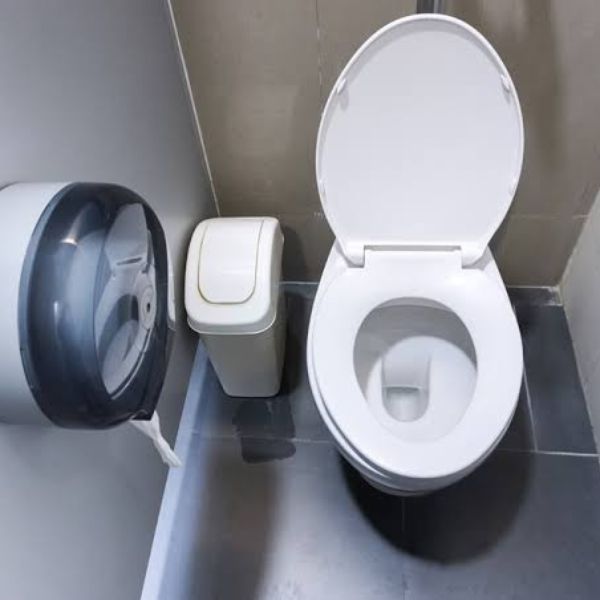
While dedicated collection services are still the right solution for many organisations -particularly larger sites or those generating higher volumes of waste – they aren’t automatically required simply because sanitary waste is involved.
Understanding how your workplace waste is classified can help you choose the most appropriate disposal method for your business, rather than assuming there’s only one option.
Hygiene matters too
Legislation is only part of the story.
Traditional plastic sanitary bins can remain in washrooms for long periods, with only the liner being replaced. Over time, moisture inside the bin can create an environment where bacteria thrive, which is often what causes unpleasant odours.
Newer disposable cardboard sanitary bins take a different approach.
Because cardboard naturally absorbs moisture and allows better airflow than plastic, research suggests it creates conditions that are less favourable for microbial growth. Studies have also found that cardboard surfaces can support lower microbial survival than comparable plastic surfaces.
Some disposable cardboard sanitary bins are also:
- Replaced completely when full rather than reused
- Moisture resistant
- Fully sealed to help contain odours
- Fully recyclable where appropriate
- Designed to last for several months before replacement, depending on usage
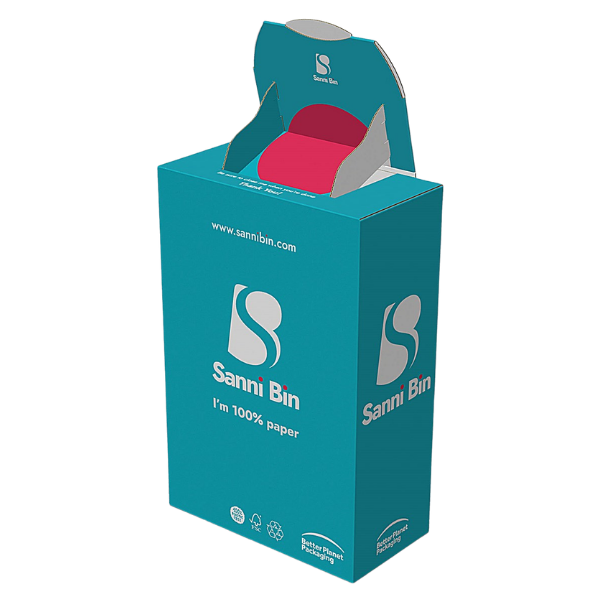
Sanni Bin offers a fresh approach. Made from 100% paper and designed to be disposed of in general waste (where waste regulations and collection volumes allow), it provides a hygienic, sustainable alternative to traditional sanitary waste collection services.
Ready to challenge the way you handle your sanitary waste?
If you want to provide a safe, hygienic and inclusive workplace, then a way to dispose of sanitary waste is a key part of this.
And thankfully, the rules aren’t quite as complicated as many people think.
By understanding the regulations, it can help you make informed decisions about your washroom facilities, and help you stay compliant while choosing a solution that works for your workplace.
If you have any questions about our extensive range of period care products, get in touch with us and we’ll be happy to help.



Recent Comments